event · evt_khirbet_qeiyafa_fortified_occupation
Fortified occupation at Khirbet Qeiyafa
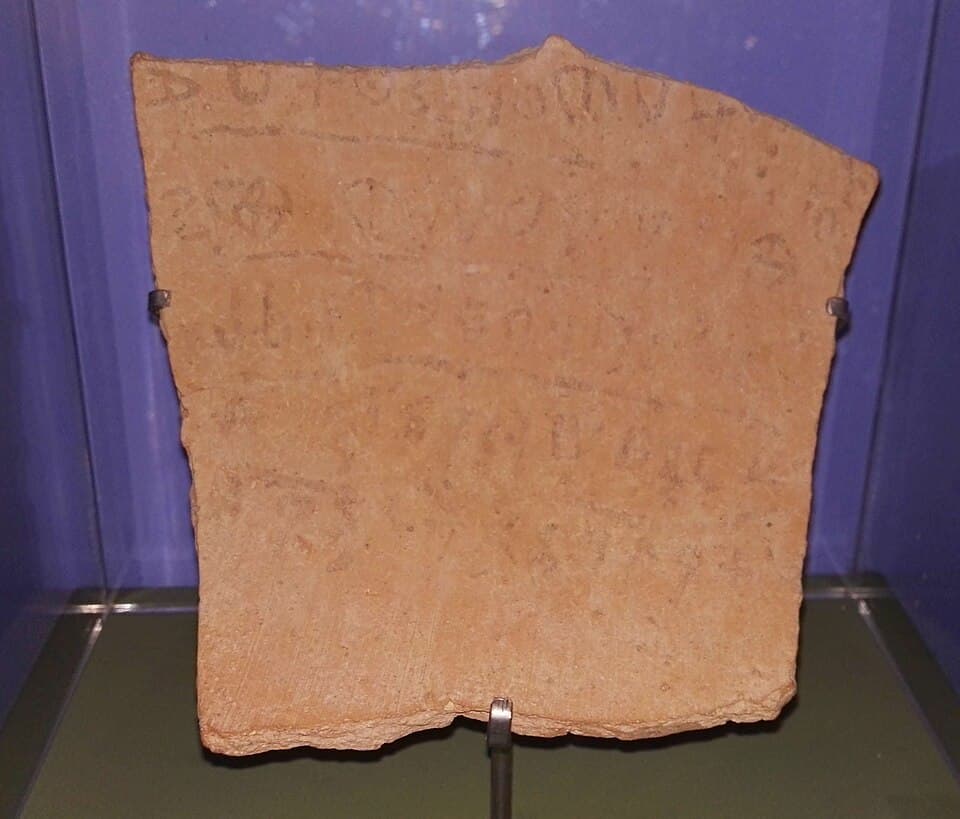
A short-lived fortified settlement with substantial architecture, faunal and material assemblages, radiocarbon dates, and inscriptions occupied the Elah Valley margin.
What is the evidence?
observation
A short-lived fortified settlement with substantial architecture, faunal and material assemblages, radiocarbon dates, and inscriptions occupied the Elah Valley margin.proposed causes
Occupation and broad date are well supported; site identification and political attribution remain contested.
Inspect the sources →Review and provenance
Specialist reviewer: not recorded. Review date: not recorded.
Dataset workflow: proposed. This is separate from specialist review.
Confidence describes the stated assessment; it does not certify expert approval. How review works.
Chronology
Dating intervals may describe uncertainty or phases; their width alone does not establish event duration.
1050 BCE–915 BCE
Precision: approximate range
Chronology model: best current range
highOccupation and broad date are well supported; site identification and political attribution remain contested.
- informs · dates
Absolute Chronology of Khirbet Qeiyafa — Yosef Garfinkel, Katharina Streit, Saar Ganor, Michael G. Hasel (2015)Provides preferred absolute range.
Locator: radiocarbon results - informs · critiques interpretation
Khirbet Qeiyafa: Absolute Chronology — Israel Finkelstein, Eli Piasetzky (2010)Provides independent chronology critique.
Locator: alternative model - informs · dates
The Relative Chronology of Khirbet Qeiyafa — Lily Singer-Avitz (2010)Provides phase alternative.
Locator: ceramic relative chronology
1050 BCE–970 BCE
Precision: modelled range
Chronology model: excavator radiocarbon model
highRadiocarbon samples date the occupation context broadly from the late eleventh into the early tenth century BCE.
- informs · dates
Absolute Chronology of Khirbet Qeiyafa — Yosef Garfinkel, Katharina Streit, Saar Ganor, Michael G. Hasel (2015)Supports this range.
Locator: radiocarbon model
1020 BCE–915 BCE
Precision: modelled range
Chronology model: lower or extended model
moderateAlternative radiocarbon and ceramic readings permit a somewhat later or extended placement; affiliation does not follow from the date.
- informs · dates
Khirbet Qeiyafa: Absolute Chronology — Israel Finkelstein, Eli Piasetzky (2010)Supports alternative limits.
Locator: absolute chronology analysis - informs · dates
The Relative Chronology of Khirbet Qeiyafa — Lily Singer-Avitz (2010)Supports ceramic alternative.
Locator: relative chronology
Interpretation and caveats
A significant early fortified centre whose chronology is clearer than its ancient name, population identity, and political affiliation.
Event context
Classification
Event type: fortified settlement occupation
Evidence layer: archaeological
Timeline role: regional core
People and places
Locations: Khirbet Qeiyafa, Shephelah, Khirbet Qeiyafa, Shephelah
Why it matters to the timeline
Qeiyafa is a major test case for early state formation, literacy, the Shephelah, and United Monarchy chronologies.
Alternative interpretations
- A Judahite administrative centre under David.
- A Saulide or northern Israelite centre.
- A Canaanite or mixed Shephelah polity independent of a large Jerusalem kingdom.
Research notes
- Provides preferred absolute range. Role: dates. Locator: radiocarbon results.
- Provides independent chronology critique. Role: critiques interpretation. Locator: alternative model.
- Provides phase alternative. Role: dates. Locator: ceramic relative chronology.
- Provides network evidence. Role: provides archaeological observation. Locator: metal assemblage.
Evidence and sources
- informs · dates
Absolute Chronology of Khirbet Qeiyafa — Yosef Garfinkel, Katharina Streit, Saar Ganor, Michael G. Hasel (2015)Provides preferred absolute range.
Locator: radiocarbon results - informs · critiques interpretation
Khirbet Qeiyafa: Absolute Chronology — Israel Finkelstein, Eli Piasetzky (2010)Provides independent chronology critique.
Locator: alternative model - informs · dates
The Relative Chronology of Khirbet Qeiyafa — Lily Singer-Avitz (2010)Provides phase alternative.
Locator: ceramic relative chronology - informs · provides archaeological observation
Metal Objects from Khirbet Qeiyafa: Technology and Cultural Context — Rivka Rabinovich, and collaborators (2019)Provides network evidence.
Locator: metal assemblage
Referenced records
- Shephelah · entity
- Khirbet Qeiyafa · entity