event · evt_kuntillet_ajrud_occupation_and_inscriptions
Occupation and inscriptional activity at Kuntillet Ajrud
A route-side installation produced inscriptions, drawings, storage contexts, and administrative/scribal material naming Yahweh of Samaria and Yahweh of Teman in debated formulae.
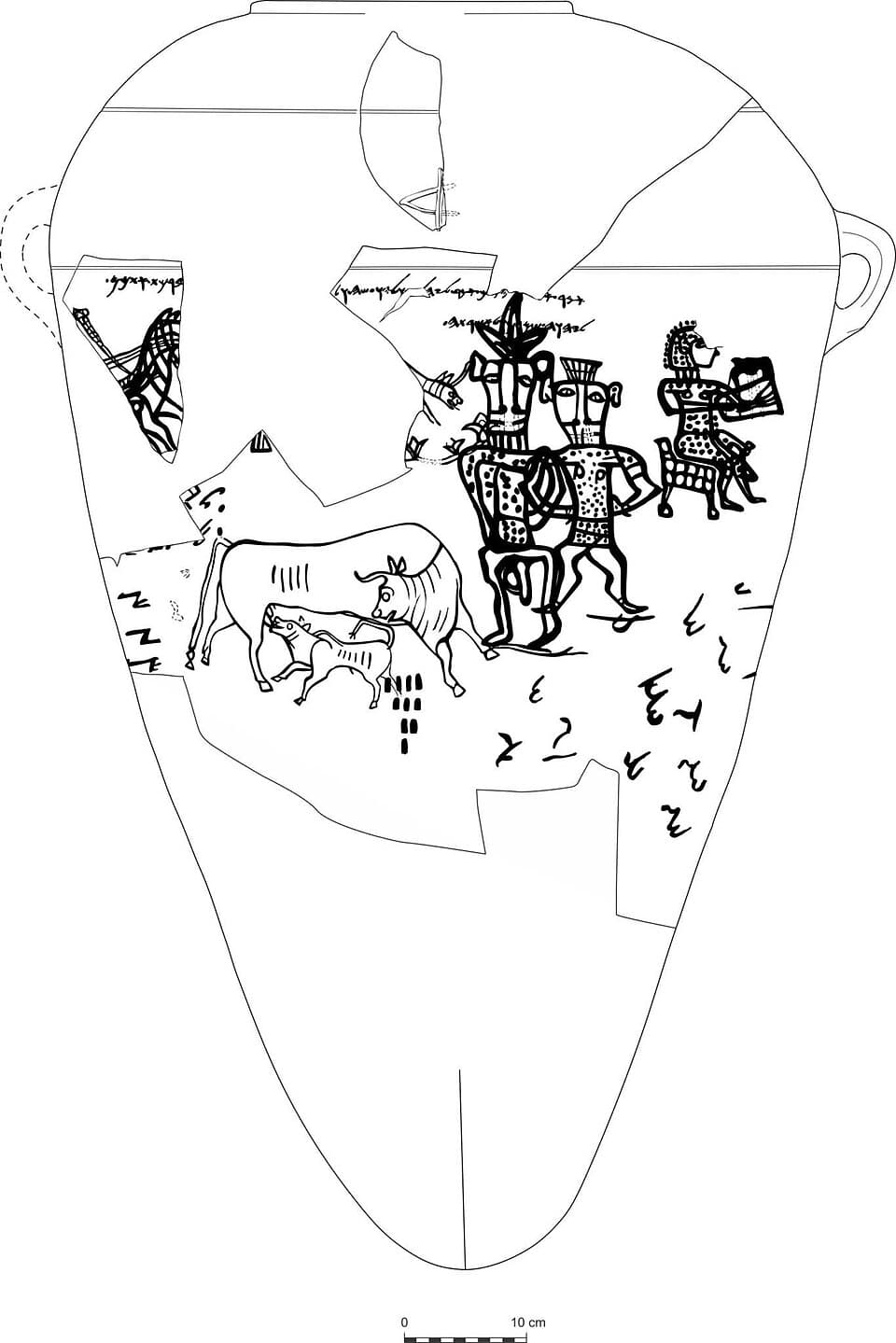
What is the evidence?
observation
A route-side installation produced inscriptions, drawings, storage contexts, and administrative/scribal material naming Yahweh of Samaria and Yahweh of Teman in debated formulae.proposed causes
The site and corpus are secure; dating within the broad range, function, political affiliation, and translation remain debated.
Inspect the sources →Review and provenance
Specialist reviewer: not recorded. Review date: not recorded.
Dataset workflow: proposed. This is separate from specialist review.
Confidence describes the stated assessment; it does not certify expert approval. How review works.
Chronology
Dating intervals may describe uncertainty or phases; their width alone does not establish event duration.
830 BCE–760 BCE
Precision: approximate range
Chronology model: best current range
highThe site and corpus are secure; dating within the broad range, function, political affiliation, and translation remain debated.
- informs · provides archaeological observation
Kuntillet ‘Ajrud (Ḥorvat Teman): An Iron Age II Religious Site on the Judah-Sinai Border — Zeev Meshel (2012)Primary final report.
Locator: architecture, ceramics, and chronology - informs · provides primary evidence
The Inscriptions — Shmuel Ahituv, Esther Eshel, Zeev Meshel (2012)Primary text edition.
Locator: inscriptions by object/locus - informs · critiques interpretation
Religion at Kuntillet ʿAjrud — Jeremy D. Smoak, William M. Schniedewind (2019)Provides alternative interpretation.
Locator: site-function and scribal curriculum argument
830 BCE–780 BCE
Precision: approximate decades
Chronology model: early first half eighth century with late ninth start
moderateSome readings allow occupation beginning in the late ninth century and continuing into the early eighth.
- informs · dates
Kuntillet ‘Ajrud (Ḥorvat Teman): An Iron Age II Religious Site on the Judah-Sinai Border — Zeev Meshel (2012)Supports final-report dating.
Locator: chronology chapter - informs · dates
The Inscriptions — Shmuel Ahituv, Esther Eshel, Zeev Meshel (2012)Supports text dating.
Locator: palaeography by inscription
780 BCE–720 BCE
Precision: approximate decades
Chronology model: later eighth century model
lowA later date has been proposed for parts of the corpus; the release keeps it as a non-preferred alternative near and beyond the primary boundary.
- informs · contextualizes
Religion at Kuntillet ʿAjrud — Jeremy D. Smoak, William M. Schniedewind (2019)Provides later-context comparison.
Locator: dating and linguistic discussion
Interpretation and caveats
Evidence for plural, regionalized Yahwistic discourse and scribal practice in the late ninth/early eighth century, not a direct description of Late Bronze religion or necessarily a temple.
Event context
Classification
Event type: site occupation and literacy
Evidence layer: archaeological
Timeline role: regional core
People and places
Locations: Kuntillet Ajrud, Sinai and Egyptian frontier, Kuntillet Ajrud, Sinai and Egyptian frontier
Affected entities: YHWH / Yahweh
Participants: Early Israelites, Judahites
Why it matters to the timeline
Although near the later boundary, the site is essential contextual evidence for early Yahwism, literacy, regional identity, and the danger of projecting later religion backward.
Alternative interpretations
- A cultic shrine staffed by priests.
- A royal/administrative caravan station with embedded religious scribal activity.
- A mixed Israelian-Judahite frontier installation.
Research notes
- Primary final report. Role: provides archaeological observation. Locator: architecture, ceramics, and chronology.
- Primary text edition. Role: provides primary evidence. Locator: inscriptions by object/locus.
- Provides alternative interpretation. Role: critiques interpretation. Locator: site-function and scribal curriculum argument.
Evidence and sources
- informs · provides archaeological observation
Kuntillet ‘Ajrud (Ḥorvat Teman): An Iron Age II Religious Site on the Judah-Sinai Border — Zeev Meshel (2012)Primary final report.
Locator: architecture, ceramics, and chronology - informs · provides primary evidence
The Inscriptions — Shmuel Ahituv, Esther Eshel, Zeev Meshel (2012)Primary text edition.
Locator: inscriptions by object/locus - informs · critiques interpretation
Religion at Kuntillet ʿAjrud — Jeremy D. Smoak, William M. Schniedewind (2019)Provides alternative interpretation.
Locator: site-function and scribal curriculum argument
Referenced records
- Sinai and Egyptian frontier · entity
- Kuntillet Ajrud · entity
- Early Israelites · entity
- Judahites · entity
- YHWH / Yahweh · entity