event · evt_bmac_andronovo_metal_source_differentiation
BMAC and Andronovo-labelled assemblages draw on differentiated metal-source zones
Lead-isotope and compositional analysis of 91 artefacts from 20 sites identifies different source compatibilities, including Iranian polymetallic and Tien Shan patterns.
What is the evidence?
observation
Lead-isotope and compositional analysis of 91 artefacts from 20 sites identifies different source compatibilities, including Iranian polymetallic and Tien Shan patterns.Review and provenance
Specialist reviewer: not recorded. Review date: not recorded.
Dataset workflow: proposed. This is separate from specialist review.
Confidence describes the stated assessment; it does not certify expert approval. How review works.
Chronology
Dating intervals may describe uncertainty or phases; their width alone does not establish event duration.
1750 BCE–1400 BCE
Precision: range
moderateWorking range preserves source uncertainty and should be refined with site-level dates.
- informs · provides scientific evidence
The rise of bronze in Central Asia: new evidence for the origin of Bronze Age tin and copper from multi-analytical research — Daniel Berger, Kai Kaniuth, Nikolaus Boroffka, Gerhard Brugmann, Steffen Kraus, Joachim Lutz, Mike Teufer, Andreas Wittke, Ernst Pernicka (2023)Provides the provenance patterns.
Locator: 91 artefacts from 20 sites, isotope and composition results - informs · contextualizes
Metal sources (tin and copper) and the BMAC — Jennifer Garner (2021)Provides geological and archaeological context.
Locator: Regional ore-source synthesis
Interpretation and caveats
The results support multiple supply systems and object histories; Mushiston matches only part of the sample and no single route explains all bronze.
Event context
Classification
Event type: metal provenance pattern
Evidence layer: archaeological
Timeline role: cross regional context
People and places
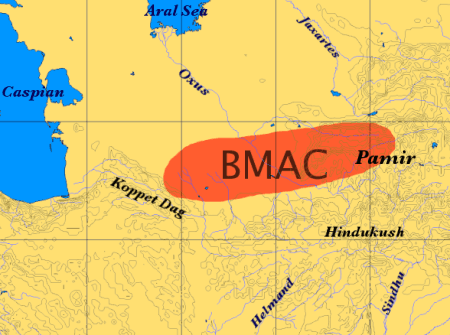
Locations: Bactria-Margiana Archaeological Complex / Oxus Civilization, Andronovo-family classifications, Mushiston mining and smelting zone, Iranian plateau, Afghanistan and Indus connection frame, Tien Shan highlands and piedmonts
Why it matters to the timeline
Object-level provenance directly connects oasis, Iranian and steppe metal systems while also limiting overextended tin-route claims.
Research notes
- Provides the provenance patterns. Role: provides scientific evidence. Locator: 91 artefacts from 20 sites, isotope and composition results.
- Provides geological and archaeological context. Role: contextualizes. Locator: Regional ore-source synthesis.
Evidence and sources
- informs · provides scientific evidence
The rise of bronze in Central Asia: new evidence for the origin of Bronze Age tin and copper from multi-analytical research — Daniel Berger, Kai Kaniuth, Nikolaus Boroffka, Gerhard Brugmann, Steffen Kraus, Joachim Lutz, Mike Teufer, Andreas Wittke, Ernst Pernicka (2023)Provides the provenance patterns.
Locator: 91 artefacts from 20 sites, isotope and composition results - informs · contextualizes
Metal sources (tin and copper) and the BMAC — Jennifer Garner (2021)Provides geological and archaeological context.
Locator: Regional ore-source synthesis