event · evt_bmac_post_bmac_reorganization
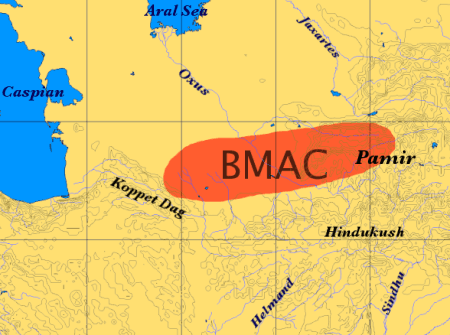
BMAC to post-BMAC reorganization in Bactria and Margiana
Major fortified centers, villages, mobile sites and exchange systems changed unevenly around the end of mature BMAC phases.
What is the evidence?
observation
Major fortified centers, villages, mobile sites and exchange systems changed unevenly around the end of mature BMAC phases.Review and provenance
Specialist reviewer: not recorded. Review date: not recorded.
Dataset workflow: proposed. This is separate from specialist review.
Confidence describes the stated assessment; it does not certify expert approval. How review works.
Chronology
Dating intervals may describe uncertainty or phases; their width alone does not establish event duration.
1900 BCE–1500 BCE
Precision: range
moderateContextual record outside all or part of the primary interval.
- informs · contextualizes
Questioning the Oxus Civilization or Bactria-Margiana Archaeological Culture (BMAC): an overview — Bertille Lyonnet, Nadezhda A. Dubova (2021)Defines the mature complex and transition problem.
Locator: Chronology and regional diversity - informs · provides archaeological observation
Ojakly: A Late Bronze Age mobile pastoralist site in the Murghab Region, Turkmenistan — Lynne M. Rouse, Barbara Cerasetti (2014)Documents continuity and interaction outside urban centers.
Locator: Mobile occupation during the transition - informs · contextualizes
Irrigating the Desert: A New Archaeology of Water Management in the Murghab Delta, Turkmenistan — Michele Arciero (2025)Provides landscape-scale change.
Locator: Settlement and hydrological reorganization
Interpretation and caveats
The evidence supports regional contraction, relocation, technological continuity and new community configurations rather than a single collapse or replacement event.
Event context
Classification
Event type: oasis system reorganization
Evidence layer: archaeological
Timeline role: regional core
People and places
Locations: Bactria-Margiana Archaeological Complex / Oxus Civilization, Post-BMAC Murghab communities, Murghab Delta and Margiana oasis system, Iranian plateau, Afghanistan and Indus connection frame
Why it matters to the timeline
The transition directly structures the southern Central Asian interval and its links to Afghanistan and Iran.
Research notes
- Defines the mature complex and transition problem. Role: contextualizes. Locator: Chronology and regional diversity.
- Documents continuity and interaction outside urban centers. Role: provides archaeological observation. Locator: Mobile occupation during the transition.
- Provides landscape-scale change. Role: contextualizes. Locator: Settlement and hydrological reorganization.
Evidence and sources
- informs · contextualizes
Questioning the Oxus Civilization or Bactria-Margiana Archaeological Culture (BMAC): an overview — Bertille Lyonnet, Nadezhda A. Dubova (2021)Defines the mature complex and transition problem.
Locator: Chronology and regional diversity - informs · provides archaeological observation
Ojakly: A Late Bronze Age mobile pastoralist site in the Murghab Region, Turkmenistan — Lynne M. Rouse, Barbara Cerasetti (2014)Documents continuity and interaction outside urban centers.
Locator: Mobile occupation during the transition - informs · contextualizes
Irrigating the Desert: A New Archaeology of Water Management in the Murghab Delta, Turkmenistan — Michele Arciero (2025)Provides landscape-scale change.
Locator: Settlement and hydrological reorganization