event · evt_uluburun_copper_cargo_loss
Loss of the Uluburun copper-ingot cargo
A ship sank off southwest Anatolia carrying hundreds of copper oxhide ingots and a diverse eastern Mediterranean cargo.
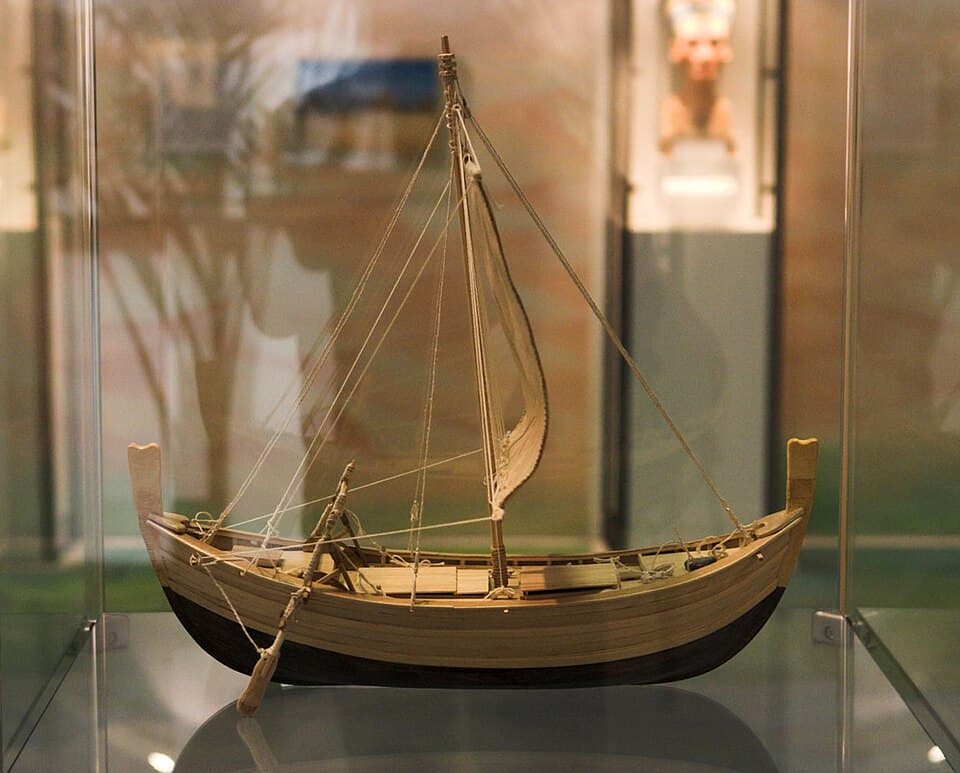
What is the evidence?
observation
A ship sank off southwest Anatolia carrying hundreds of copper oxhide ingots and a diverse eastern Mediterranean cargo.Review and provenance
Specialist reviewer: not recorded. Review date: not recorded.
Dataset workflow: proposed. This is separate from specialist review.
Confidence describes the stated assessment; it does not certify expert approval. How review works.
Chronology
Dating intervals may describe uncertainty or phases; their width alone does not establish event duration.
1335 BCE–1300 BCE
Precision: approximate
very highPreferred display range for this event. It preserves positive BCE ordering and does not suppress narrower contexts or alternative chronology models.
- informs · provides excavation synthesis
The Uluburun Shipwreck and Late Bronze Age Trade — Cemal Pulak (2008)Documents the shipwreck and copper cargo.
Locator: Cargo composition and chronology - informs · contextualizes
The Production and Trade of Cypriot Copper in the Late Bronze Age: An Analysis of the Evidence — Vasiliki Kassianidou (2013)Places the cargo within production and trade debates.
Locator: Cypriot copper export evidence
1335 BCE–1300 BCE
Precision: range
Chronology model: Uluburun excavation chronology
very highScientific and archaeological bracket for the wreck, kept separate from any proposed itinerary.
- informs · dates
The Uluburun Shipwreck and Late Bronze Age Trade — Cemal Pulak (2008)Scientific and archaeological bracket for the wreck, kept separate from any proposed itinerary.
Locator: Shipwreck chronology
Interpretation and caveats
The wreck demonstrates large-scale shipborne metal movement and cargo aggregation; provenance, route, ownership, and political sponsor must be modeled separately.
Event context
Classification
Event type: shipwreck and cargo loss
Evidence layer: archaeological
Timeline role: cross regional context
People and places
Locations: Uluburun shipwreck, Cyprus eastern Mediterranean maritime interaction zone
Why it matters to the timeline
Provides direct cargo evidence for the international copper system in which Cyprus was a major producer.
Research notes
- Documents the shipwreck and copper cargo. Role: provides excavation synthesis. Locator: Cargo composition and chronology.
- Places the cargo within production and trade debates. Role: contextualizes. Locator: Cypriot copper export evidence.
Evidence and sources
- informs · provides excavation synthesis
The Uluburun Shipwreck and Late Bronze Age Trade — Cemal Pulak (2008)Documents the shipwreck and copper cargo.
Locator: Cargo composition and chronology - informs · contextualizes
The Production and Trade of Cypriot Copper in the Late Bronze Age: An Analysis of the Evidence — Vasiliki Kassianidou (2013)Places the cargo within production and trade debates.
Locator: Cypriot copper export evidence
Referenced records
- Uluburun shipwreck · entity
- Cyprus eastern Mediterranean maritime interaction zone · entity